
Lost in the Data Fog? Your Company Might Be Overdosing


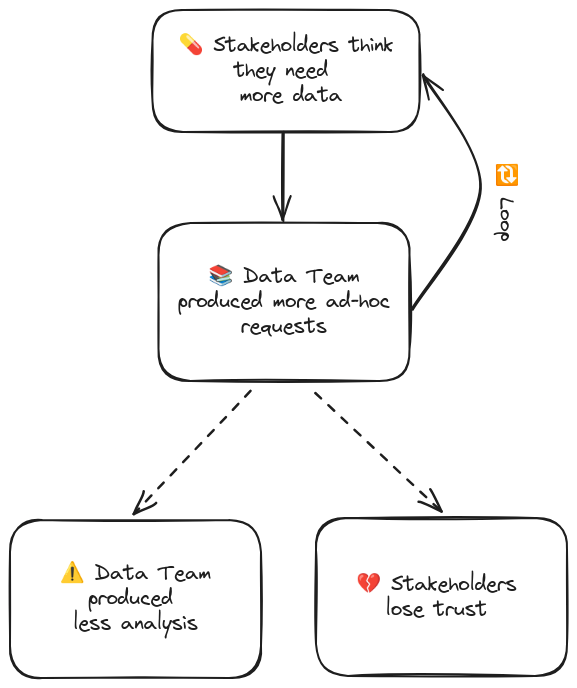
Everyone wants to be “data-driven,” but no one talks about the dangers of analytical overdose. Too much data, more confusion, zero impact. Like a bloatware, excessive data slows you down, clogs decision-making, and eventually paralyzes your organization. Here’s the vicious cycle of data bloat.
1 — The Data Mirage: Chasing Numbers, Losing Clarity
The belief that more data leads to better decisions fuels endless demands for more numbers. Metrics pile up, but their meaning gets lost. Each department defines its own KPIs, leading to contradictions, misalignment, and decision paralysis.
2 — The Report Factory: Data Teams Trapped in a Cycle of Useless Outputs
Endless ad-hoc requests turn the data team into a reactive unit, producing reports instead of driving strategy. More analysis doesn’t mean better decisions. Information overload leads to inaction and wasted resources.
3 — The Data Backlash: When Leadership Stops Believing in the Numbers
Leadership loses faith in analytics, losing trust in Data Team, seeing it as a barrier rather than an enabler. More data is requested to compensate…
4 —… Loop!
Welcome to the trap you’ve built yourself. More data, more confusion, more paralysis. Congratulations!
Stop the Overdose.
First, cut the noise: define essential metrics, ignore the rest. Then stop feeding the addiction: every useless query or dashboard is a waste of time. Think impact, not volume: less data, better used.
If your company looks like an analytical bloatware, it’s time to hit reset. Less but better — that’s the key.